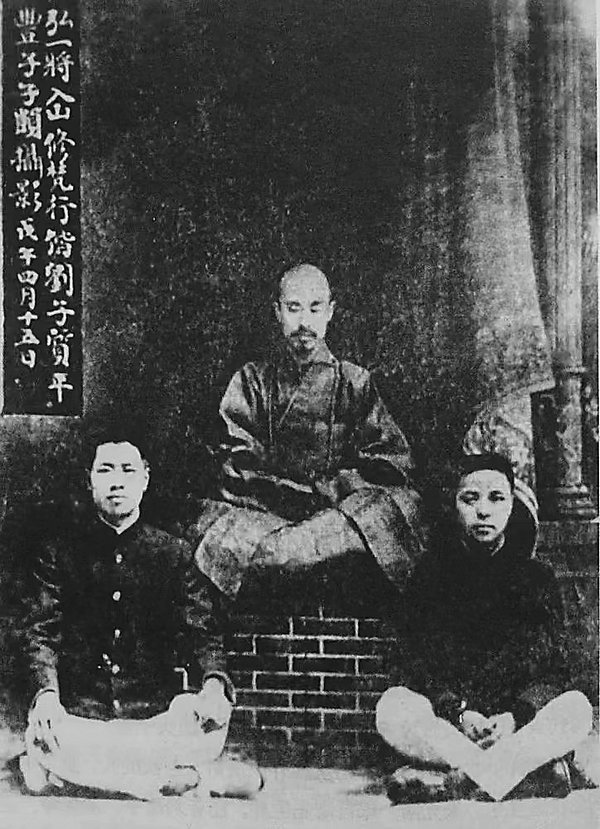
Li Shutong
Introduction
Li Shutong, later known as Master Hongyi, is a celebrated figure in Chinese cultural history. Born in 1880, Li was a polymath who made significant contributions to art, music, drama, and education in China before becoming a Buddhist monk. He is renowned for his pioneering work in introducing Western classical music to China and for his role in the development of modern Chinese art and drama. In addition to his artistic achievements, he is remembered for his profound impact on Chinese Buddhism during the 20th century. His multifaceted career and spiritual journey reflect a deep commitment to cultural and spiritual enrichment, making him a beloved and influential figure.
Early Life
Li Shutong was born into a scholarly family in Tianjin, China, in 1880. From an early age, he exhibited a remarkable talent for the arts, which was nurtured by his family. His father, who was well-versed in traditional Chinese culture, provided Li with a solid foundation in classical literature and calligraphy. This early exposure to traditional arts influenced his later work and artistic style. As a young boy, Li was sent to study in Shanghai, where he gained exposure to Western culture and ideas, which would later play a significant role in his artistic development.
Education
Li Shutong's education was marked by a blend of traditional Chinese and Western influences. He attended Nanyang Public School in Shanghai, one of China's first modern educational institutions that offered a curriculum integrating Western subjects. This exposure to Western art and music was pivotal in shaping his later career. Li's talents were recognized early on, and he pursued further studies in Japan, where he honed his skills in Western painting and music. His education abroad allowed him to bridge Eastern and Western artistic traditions, which became a hallmark of his work.
Career
Teaching Career
Upon returning to China from Japan, Li Shutong embarked on a teaching career that had a lasting impact on Chinese education and culture. He joined the faculty of the National School of Fine Arts in Hangzhou, where he introduced Western artistic techniques and theories to his students. Li's approach to teaching was innovative; he encouraged creativity and critical thinking, in contrast to the rote learning methods that were prevalent at the time. Many of his students went on to become prominent figures in Chinese art and literature, testament to his influence as an educator.
Artistic Contributions
Li Shutong was a versatile artist who left a lasting legacy in various fields. As a musician, he played a pivotal role in introducing Western classical music to China and composed one of his most iconic songs, Farewell, which beautifully blends Western melodies with Chinese poetic sensibilities.His work in theater included adapting Western plays for Chinese audiences and developing modern Chinese drama. Li was also a skilled painter, known for his ability to blend traditional Chinese techniques with Western styles, creating a unique artistic expression. His contributions to calligraphy and poetry further exemplify his diverse talents and enduring impact on Chinese culture.
Conversion to Buddhism
In 1918, Li Shutong made a life-changing decision to renounce worldly pursuits and embrace Buddhism, taking the name Hongyi. His conversion marked a profound shift in his life's focus, from the material to the spiritual. As a Buddhist monk, he dedicated himself to the study and practice of Buddhism, emphasizing simplicity, humility, and compassion. Master Hongyi became known for his ascetic lifestyle and deep spiritual insights, which he shared through his teachings and writings. His integration of art and spirituality exemplified the harmony between cultural expression and spiritual practice, leaving a lasting legacy in both realms.
Impact and Legacy
Li Shutong's impact on Chinese culture and spirituality is significant and enduring. His artistic innovations laid the groundwork for modern Chinese art, music, and drama. As a teacher, he inspired a generation of artists and thinkers, many of whom continued to shape Chinese culture in the 20th century. His conversion to Buddhism and subsequent spiritual teachings enriched the cultural and spiritual landscape of China. Li's work continues to influence contemporary artists and spiritual seekers, reflecting his lasting legacy as a bridge between tradition and modernity, and between the material and spiritual worlds.








